If the past year has taught investors anything, it is the enduring value of discipline in the face of uncertainty. 2025 delivered a masterclass in market resilience: a reshaped political landscape, global trade disruptions, the deepest government shutdown in U.S. history, tax-code overhauls, and a sharp correction in equities.
And yet, despite the chaos, nearly every major asset class posted positive returns by mid-December. U.S. large caps, small caps, international developed stocks, and emerging markets all delivered double-digit gains, powered by the quiet but mighty engine of corporate earnings.
As we move into 2026, the noise isn’t fading. Geopolitical tensions remain high. The U.S. economy is navigating record federal debt. Technology is advancing at a blistering pace, pushing companies and workers into a race for adaptation. Markets remain sensitive to Fed policy shifts, Treasury-market volatility, and questions about long-term inflation pressures.
Yet, amid this turbulence, 2026 could be another exceptional year for investors—especially those who stay invested and position their portfolios to withstand inflation.
Below are seven professional strategies to help inflation-proof your portfolio, taking into account the evolving economic backdrop, powerful earnings tailwinds, and key risks shaping the year ahead.
1. Prioritize Equity Exposure—Especially Where Earnings Growth Is Broadening
One of the strongest defenses against inflation is owning businesses whose earnings grow faster than prices rise.
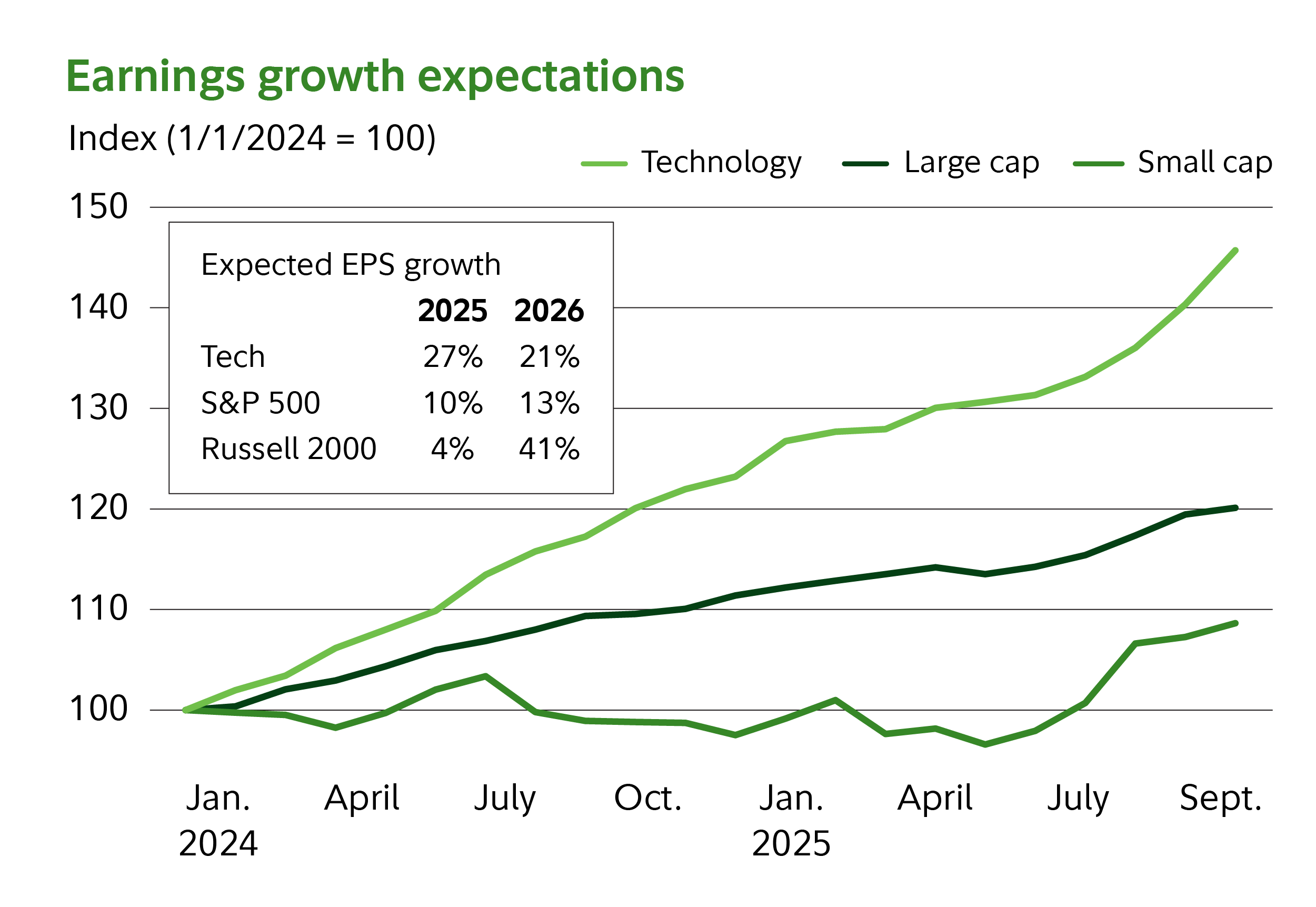
In 2025, the bulk of earnings strength came from mega-cap tech companies, but that dynamic is shifting. Analysts expect that in 2026:
- S&P 500 companies will again deliver double-digit earnings growth, potentially accelerating from 2025.
- Mid-cap and small-cap companies are seeing improving earnings expectations, marking a turning point after years of underperformance.
- Median-stock earnings growth in 2025 turned positive, signaling that the recovery is broadening beneath the surface.
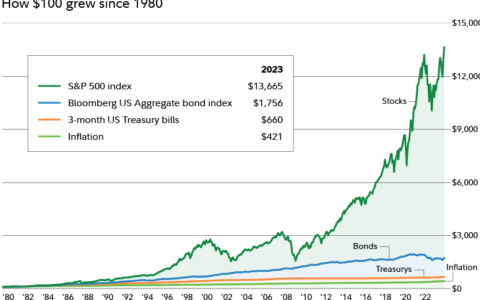
When earnings growth is expanding across more industries and more sizes of companies, equities tend to outperform inflation over time. Quality companies with improving cash flows can raise prices, protect margins, and compound value—even when economic uncertainty rises.
How to implement:
- Maintain diversified equity exposure across U.S. large caps, mid-caps, and small caps.
- Tilt toward companies with strong pricing power, high return on invested capital (ROIC), and consistent profitability.
- Avoid trying to time the market—volatility is inevitable, but historically markets move higher as earnings rise.
2. Add International Stocks to Benefit from Dollar Weakness
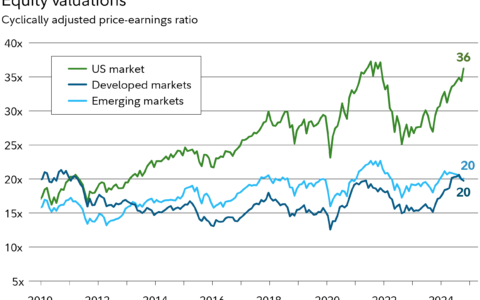
One of the biggest stories of 2025 was the 8.7% decline in the U.S. dollar, which propelled international stocks higher—developed international markets surged 28% in dollar terms.
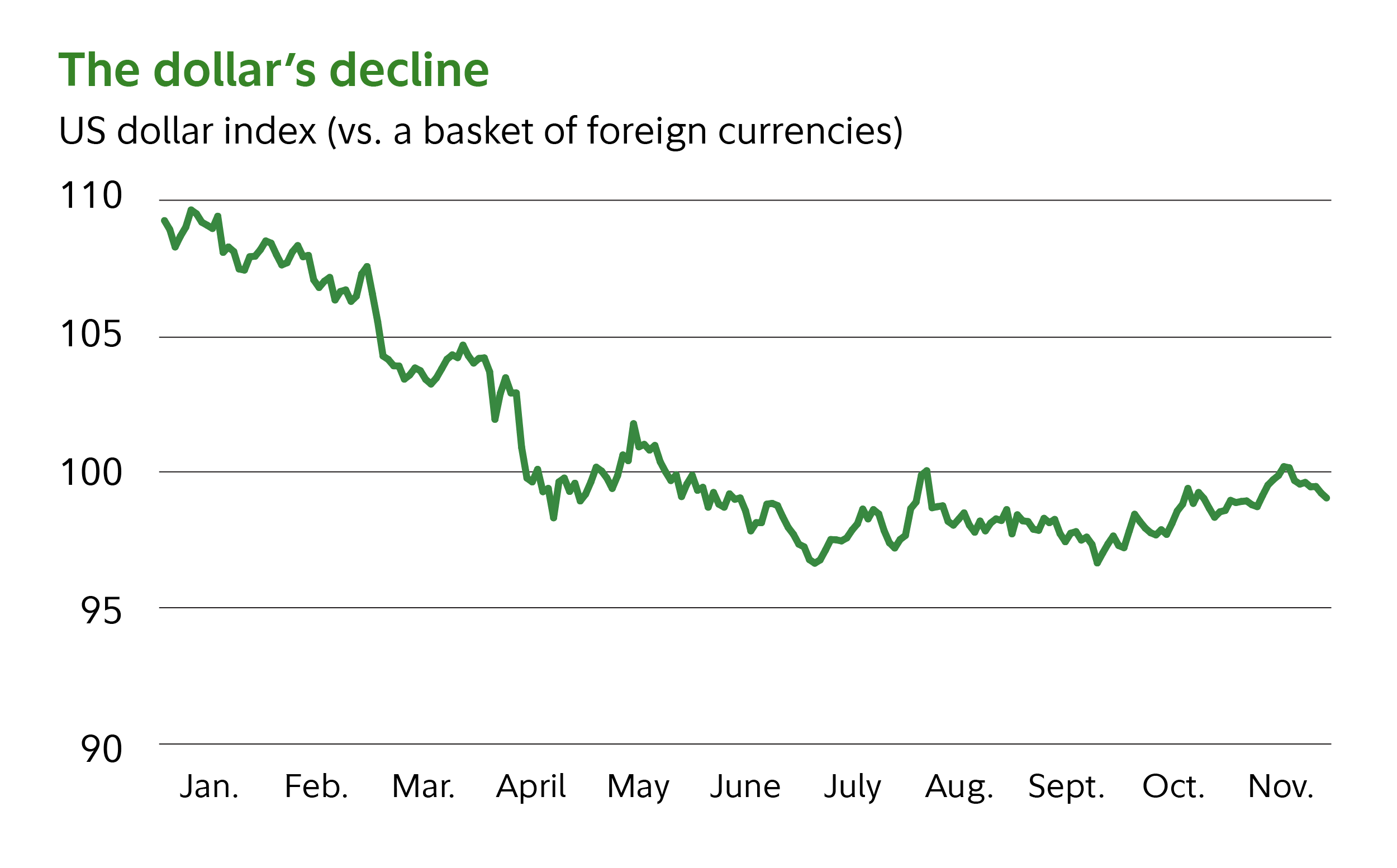
Several structural factors suggest the dollar could continue weakening:
- A global shift toward a more multipolar world
- Central banks diversifying away from U.S. Treasury holdings
- Higher relative valuations of U.S. assets
- Increased domestic investment in foreign economies, leading to capital repatriation
A weaker dollar boosts:
- Returns on international stock holdings, and
- Revenues of U.S. multinational companies, since foreign income translates into more dollars.
This creates a compelling inflation-hedging opportunity: international assets often outperform when the dollar declines, and foreign economies may experience different inflation cycles than the U.S.
How to implement:
- Increase strategic exposure to developed markets (Europe, Japan) and emerging markets.
- Consider currency-unhedged international equity ETFs when expecting persistent dollar weakness.
- Focus on regions with accelerating CapEx cycles and strong consumer demand.
3. Use Real Assets as a Direct Inflation Hedge
Real assets tend to rise with inflation because they are tied to the physical economy. Key categories include:
- Real estate (REITs, rental properties)
- Infrastructure assets (utilities, pipelines, toll roads)
- Commodities (energy, metals, agriculture)
- Natural resources equities
These assets typically offer two advantages:
- Pricing power—rents, tolls, and commodity prices often increase with inflation.
- Low correlation to traditional stock/bond portfolios, enhancing diversification.
Given the potential volatility in the Treasury market—and the possibility that long-term inflation expectations drift upward—real assets can help stabilize portfolio purchasing power.
How to implement:
- Use REIT ETFs for diversified real estate exposure.
- Consider broad-based commodity funds or energy sector ETFs.
- Allocate to global infrastructure funds that benefit from multi-year government spending cycles.
4. Lock In Opportunities from the Fed’s Rate Cuts—Before Yields Fall Further
The Federal Reserve has already begun cutting rates, with more cuts potentially on the table in 2026. Historically, when the Fed lowers rates during an economic expansion, stocks have risen due to:
- Higher earnings
- Higher price-earnings (P/E) multiples
- Lower borrowing costs that boost corporate profitability
Rate cuts disproportionately help:
- Small businesses, which rely more on borrowing
- Housing-related sectors, including homebuilders
- Capital-intensive industries, which benefit from cheaper financing
Lower rates can fuel economic expansion—but they also reduce real returns on cash. Investors holding large cash balances risk losing purchasing power as inflation compounds.
How to implement:
- Reduce excess cash holdings beyond emergency needs.
- Revisit allocations to growth-oriented equities and rate-sensitive sectors.
- Lock in attractive yields in short- and intermediate-term bonds before rates fall further.
5. Strengthen Your Bond Strategy Against Inflation and Treasury Volatility
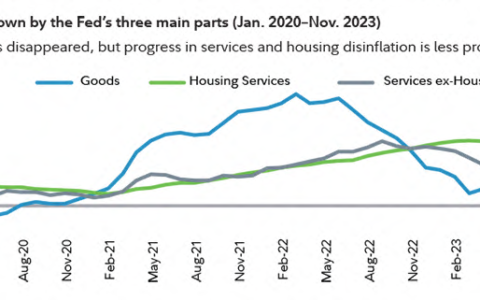
While stocks may be well-positioned for another strong year, the U.S. Treasury market remains a key fault line for long-term inflation risk.
Several scenarios could put upward pressure on long-term yields:
- Concerns over Fed independence
- Policy bias toward lower rates despite elevated inflation
- Rising U.S. debt and deficits
- Lower global demand for U.S. Treasurys
- Shocks to Treasury auctions or yield curve volatility
An unexpected jump in long-term yields can erode bond values and hurt stock valuations.
To inflation-proof your fixed-income portfolio:
How to implement:
- Use short- and intermediate-duration bonds to reduce sensitivity to rising yields.
- Add Treasury Inflation-Protected Securities (TIPS) to hedge unexpected inflation spikes.
- Consider high-quality corporate bonds, which benefit from strong earnings cycles.
- Avoid concentrating too heavily in long-duration Treasurys.
6. Position for the AI-Driven CapEx Boom
The AI boom isn’t just hype—it has already reshaped the economy more profoundly than most Americans realize.
Key facts:
- AI-related capital expenditures have accounted for ~60% of recent U.S. economic growth.
- Global AI infrastructure spending may exceed $2 trillion in 2026.
- Companies are still in the early “railroad building” phase—laying digital infrastructure before reaping productivity gains.
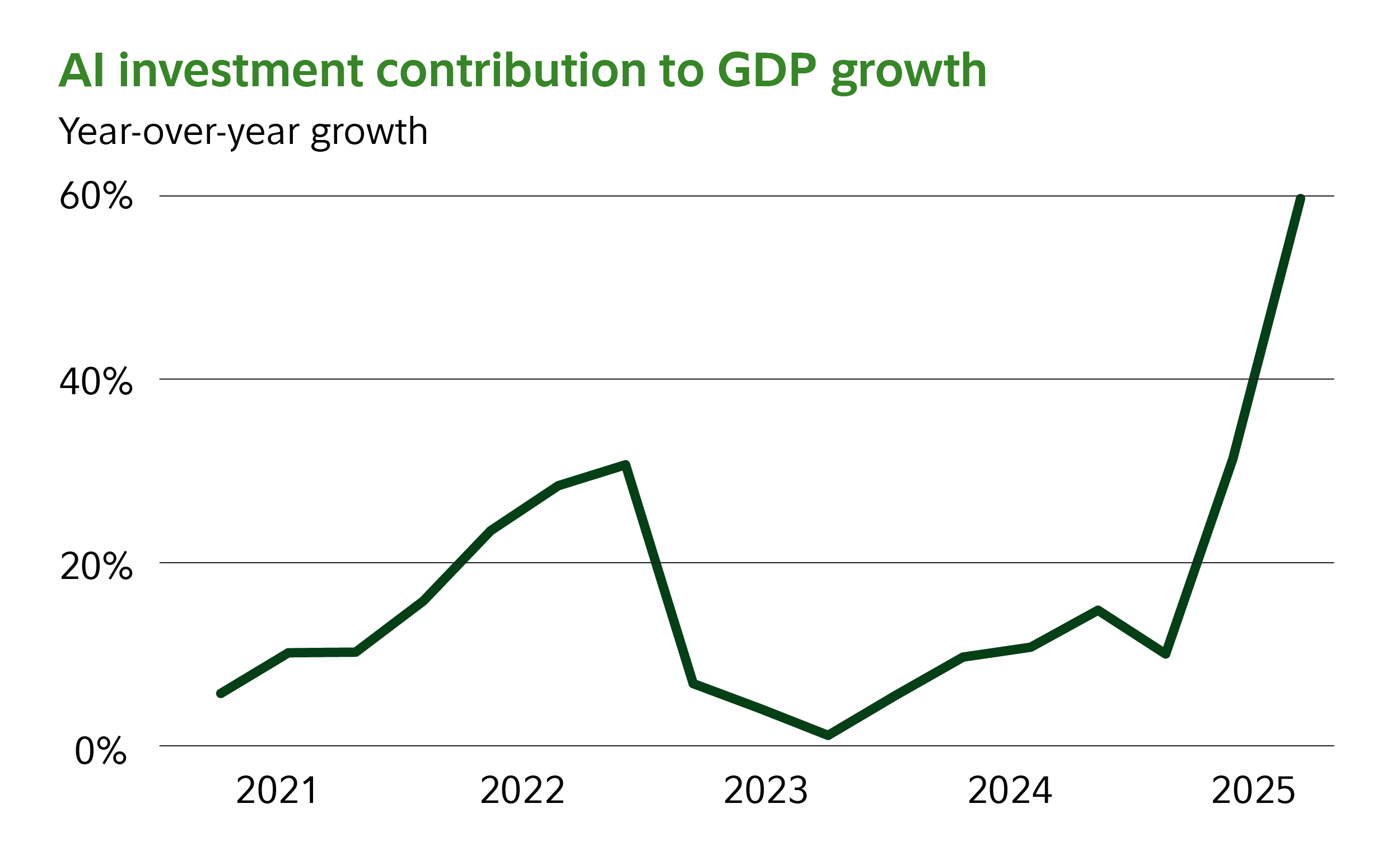
Though some fear an AI bubble, current fundamentals look far healthier than the dot-com era:
- Earnings remain strong
- AI investments are funded largely with cash flow—not unsustainable debt
- Valuations, while high, are nowhere near late-1990s extremes
AI-driven productivity improvements could help offset inflationary pressures over time by increasing output. Companies leading in AI adoption—or supplying the infrastructure behind it—may enjoy an earnings tailwind independent of broader inflation dynamics.
How to implement:
- Consider diversified exposure to semiconductor companies, data center operators, and cloud infrastructure providers.
- Blend growth stocks with value and industrial beneficiaries of AI-driven CapEx cycles.
- Avoid overconcentration in a handful of mega-cap tech names; diversify across the AI supply chain.
7. Maintain Discipline: Volatility Is a Feature, Not a Bug
Every year brings new headlines designed to rattle investors. In 2025, it was politics, trade disruptions, and government shutdowns. In 2026, it may be inflation fears, Treasury-market volatility, or Fed policy uncertainty.
The most consistent truth in markets?
Volatility is normal—and often profitable for long-term investors.
Markets reward patience, diversification, and a focus on fundamentals rather than noise. With strong earnings momentum, policy tailwinds, and global economic expansion still in place, investors who stay disciplined stand to benefit.
How to implement:
- Stick to your long-term financial plan.
- Rebalance periodically to maintain target allocations.
- Avoid reacting emotionally to headlines or short-term pullbacks.
- Focus on fundamentals: earnings, cash flows, valuations, and diversification.
Final Thoughts: Build Inflation Resilience While Capturing Growth
The coming year will likely be rich with both risk and opportunity. Inflationary pressures, political uncertainty, and market volatility are real—but so are the powerful tailwinds of corporate earnings growth, tax policy stimulus, interest rate cuts, and a generational AI investment cycle.
By focusing on what truly matters—and ignoring the noise—investors can protect purchasing power and grow their wealth, even in an unpredictable world.
A well-structured, inflation-resilient portfolio is not only possible—it is essential for long-term financial success.
Author:Com21.com,This article is an original creation by Com21.com. If you wish to repost or share, please include an attribution to the source and provide a link to the original article.Post Link:https://www.com21.com/7-proven-ways-to-inflation-proof-your-portfolio-in-2026-and-beyond.html