For investors seeking income, the past few years have been a reminder that “safe” does not always mean “simple.” Interest rates, inflation expectations, credit conditions, and market volatility can all influence the return you receive from conservative investments. Even though yields on many cash and fixed-income products have come down from recent highs, it is still possible to earn a respectable return through a thoughtful mix of relatively low-risk investments.
The key is not simply to chase the highest advertised yield. A better approach is to match each investment with your financial goals, risk tolerance, liquidity needs, and time horizon. A retiree who needs steady income over the next 12 months may require a very different strategy from a younger investor saving for a house down payment in three years. Likewise, an investor who wants FDIC insurance may prefer certificates of deposit, while another investor may be comfortable with high-quality bond funds or Treasury securities.
As Richard Carter, vice president of fixed income strategy at Fidelity Investments, notes, investors should do their homework and diversify even within low-risk investments. Different products can vary in credit risk, default risk, price volatility, payout timing, and return profile. In other words, “low risk” does not mean “no risk.”
Below are six low-risk investment options for yield seekers.

1. Certificates of Deposit: Predictable Returns with FDIC Protection
Certificates of deposit, commonly known as CDs, are among the most straightforward low-risk investments. A CD allows you to deposit a lump sum for a fixed period, such as six months, one year, or five years, in exchange for a fixed interest rate. At maturity, you receive your principal back plus the interest earned.
Traditional CDs are typically issued by banks and insured by the Federal Deposit Insurance Corporation, within applicable limits. This makes them attractive for investors who prioritize principal protection and predictable income. However, CDs usually require a minimum deposit, and early withdrawals often come with penalties.
Brokered CDs are another option. These are issued by banks but purchased through brokerage firms and held in brokerage accounts. Like traditional bank CDs, brokered CDs can be FDIC-insured, but investors should understand how coverage applies and how issuer limits work. Buying brokered CDs from multiple banks through a brokerage account may help expand FDIC coverage, subject to the rules and limits of the insurance program.
One important distinction is liquidity. Traditional CDs are usually designed to be held until maturity. Brokered CDs, by contrast, can often be sold on the secondary market before maturity. But selling early introduces market risk. The resale price may be lower than the original purchase price, particularly if interest rates rise after you buy the CD. Therefore, CDs are best suited for money you do not expect to need before maturity.
2. Money Market Funds: Liquidity and Diversification for Cash Investors
Money market funds can be useful for investors who want liquidity while still earning income on cash. These funds typically invest in short-term, high-quality instruments such as Treasury securities, government securities, commercial paper, or municipal debt, depending on the fund’s objective.
Compared with stock funds or long-term bond funds, money market funds are generally less volatile. They may be suitable for emergency reserves, short-term savings, or uninvested cash inside a brokerage account. Their main benefits are liquidity, diversification, and convenience.
However, investors should not confuse money market funds with bank savings accounts. Money market funds are investment products, not bank deposits. They are not protected by the FDIC or NCUA. Their income also fluctuates as market yields change. When short-term interest rates decline, the yield on money market funds may also fall.
For investors who want flexibility and easy access to cash, money market funds can be an efficient parking place. But for investors who need guaranteed principal protection from a bank-backed product, CDs or insured savings accounts may be more appropriate.
3. Treasury Securities: Backed by the U.S. Government
Treasury securities are considered one of the highest-quality fixed-income investments because they are backed by the U.S. government. They come in three main forms: Treasury bills, Treasury notes, and Treasury bonds.
Treasury bills mature in one year or less. Treasury notes generally mature in two to ten years. Treasury bonds usually mature in 20 to 30 years. When investors buy Treasurys, they are lending money to the U.S. government. At maturity, they receive the face value of the security, along with interest income earned during the holding period.
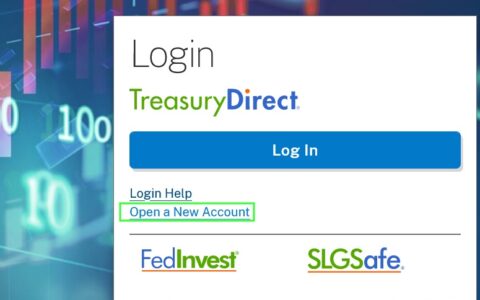
Treasury securities can be useful for investors seeking high credit quality, predictable cash flows, and portfolio stability. They may be purchased through banks, credit unions, brokerage firms, or directly from the government through TreasuryDirect.
Investors concerned about inflation may also consider Treasury Inflation-Protected Securities, or TIPS. TIPS pay a fixed interest rate, but their principal value adjusts with inflation or deflation based on the Consumer Price Index. This feature can help preserve purchasing power during inflationary periods. However, TIPS often carry lower stated interest rates than comparable traditional Treasurys.
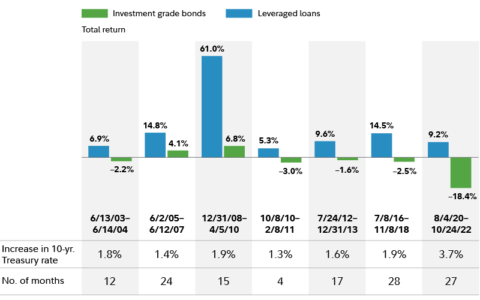
The main risk with Treasurys is not default risk but interest-rate risk. If you sell a Treasury before maturity, its market value may be higher or lower than your purchase price depending on changes in interest rates. Longer-term Treasurys tend to be more sensitive to rate changes than short-term bills.
4. Agency Bonds: Potentially Higher Yields with High Credit Quality
Agency bonds are issued by federal agencies or government-sponsored enterprises. These securities can appeal to investors who want relatively high credit quality and potentially higher yields than Treasurys of similar maturity.
Government-sponsored enterprises include institutions such as Freddie Mac, Fannie Mae, the Federal Home Loan Banks, and the Federal Farm Credit Banks. Bonds issued by GSEs are generally considered high quality, but they are still subject to credit and default risk.
Some federal agencies are backed by the full faith and credit of the U.S. government. Ginnie Mae, for example, is part of the federal government, although it does not issue bonds directly; it guarantees certain mortgage-backed securities. Other agencies, such as the Tennessee Valley Authority, are not backed by the U.S. government and instead rely on revenues generated by their projects.
Because agency and GSE bonds are not all the same, investors need to look carefully at the issuer, credit backing, maturity, call features, and yield. Some agency bonds may be callable, meaning the issuer can redeem the bond before maturity. If that happens when rates have fallen, investors may have to reinvest at lower yields.
For yield seekers willing to do additional research, agency bonds can occupy a useful middle ground between Treasurys and higher-risk corporate bonds.
5. Bond Mutual Funds and ETFs: Diversification with Professional Management
Bond mutual funds and exchange-traded funds allow investors to gain exposure to a diversified portfolio of bonds through a single investment. These funds may hold government bonds, corporate bonds, municipal bonds, mortgage-backed securities, or a combination of fixed-income assets.
The main advantage is diversification. Instead of buying individual bonds one by one, investors can own a professionally managed basket of bonds. This can help reduce the impact of a single issuer defaulting or underperforming. Bond funds and ETFs also offer liquidity because investors can generally buy or sell shares without waiting for individual bonds to mature.
However, bond funds are not the same as individual bonds held to maturity. A bond fund does not have a fixed maturity date in the same way an individual bond does. Its share price can fluctuate with interest rates, credit spreads, and market conditions. If rates rise, longer-duration bond funds may decline in value. If credit conditions weaken, lower-quality bond funds may also suffer.
Investors should pay attention to the fund’s duration, credit quality, expense ratio, distribution history, and underlying holdings. Short-term government bond funds may be relatively conservative, while long-term high-yield bond funds can carry much more risk.
Bond funds and ETFs can be a good choice for investors who want income, diversification, and professional management, but they require careful selection.
6. Deferred Fixed Annuities: Guaranteed Rates with Limited Liquidity
A deferred fixed annuity is an insurance product that typically provides a guaranteed rate of return over a set period, such as three to ten years. The investment grows tax-deferred, meaning taxes are generally not owed until withdrawals are made. Another potential advantage is that there are no IRS contribution limits.
Deferred fixed annuities may be attractive to investors approaching retirement or already in retirement, especially those who value principal guarantees and predictable returns. They can also appeal to investors who do not need immediate liquidity and want assets to compound tax-deferred.
However, annuities are not FDIC-insured. Their guarantees depend on the claims-paying ability of the issuing insurance company. Investors should evaluate the insurer’s financial strength before purchasing. Early withdrawals may also be subject to surrender charges, market value adjustments, and tax penalties. Withdrawals before age 59½ may be subject to a 10% IRS penalty in addition to ordinary income tax.
Many deferred fixed annuities allow limited penalty-free withdrawals, often up to 10% annually, but they are still best suited for money that can remain invested for the full surrender period.
Final Thoughts: Low Risk Still Requires Smart Planning
Yield seekers have several relatively low-risk options, but the best choice depends on the purpose of the money. For short-term cash needs, money market funds, Treasury bills, or short-term CDs may be appropriate. For medium-term income, CDs, Treasurys, agency bonds, or short-duration bond funds may make sense. For retirement-oriented investors who value guarantees and tax deferral, deferred fixed annuities may be worth considering.
The most important principle is alignment. Match the investment to your time horizon, liquidity needs, tax situation, and tolerance for market fluctuations. Also remember that diversification matters even in conservative portfolios. Combining several low-risk investments may help balance liquidity, income, safety, and flexibility.
Low-risk investing is not about eliminating every possible risk. It is about understanding the risks you are taking and making sure they fit your financial plan. For yield seekers, that discipline can make the difference between simply chasing rates and building a more resilient income strategy.
Author:Com21.com,This article is an original creation by Com21.com. If you wish to repost or share, please include an attribution to the source and provide a link to the original article.Post Link:https://www.com21.com/6-low-risk-investments-for-yield-seekers-building-reliable-income-while-managing-risk.html