Financial markets have always been influenced by uncertainty. Wars, inflation fears, political shifts, interest-rate changes, and economic cycles constantly generate headlines that make investors question their strategies. In today’s environment, volatility and geopolitical concerns—from energy markets to global conflicts—have created a wave of anxiety among investors.
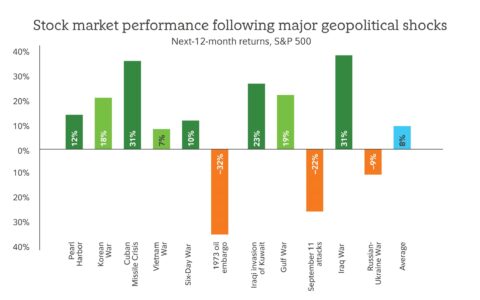
When markets feel unstable, many investors instinctively try to protect themselves by making drastic portfolio changes. Some move entirely into cash, others try to time the market, while many simply stop investing altogether.
Ironically, these reactions often lead to weaker long-term investment outcomes.
History repeatedly shows that investors who remain disciplined and focus on controllable factors—such as diversification, taxes, and emotional discipline—tend to achieve better results than those who react to headlines.
Below are the seven biggest mistakes investors are making right now, along with practical strategies to avoid them.
1. Avoiding Investment Decisions Because of Uncertainty
One of the most common mistakes investors make is waiting for the world to feel more predictable before investing.
Today’s uncertainties are easy to list:
- Middle East conflicts
- Energy price shocks
- Inflation fears
- Interest-rate uncertainty
- Global political tensions
Because of these factors, many investors are sitting on the sidelines waiting for “clear signals” that markets are safe again.
The problem is that those signals rarely arrive.
Financial markets historically rise during periods of uncertainty, not after them. By the time the news becomes universally positive, markets have often already rallied.
Investors who delay investment decisions may unintentionally miss large portions of market gains.
Key takeaway:
Markets reward time in the market, not timing the market.
2. Constantly Expecting the “Next Market Crash”
Another widespread mistake is assuming that a major economic collapse is always just around the corner.
Financial media often amplifies negative scenarios:
- Recession fears
- Market crashes
- Banking crises
- Energy shocks
These headlines can create a psychological bias called “negativity bias”, where investors overweight negative possibilities.
However, economic cycles are complex and resilient. Currently, many economists believe the U.S. economy remains in the middle phase of the business cycle, typically characterized by:
- steady economic growth
- healthy corporate profits
- stable employment
Even if a recession eventually occurs, it does not invalidate long-term investment strategies.
Historically:
- Markets have recovered from every recession
- Markets have recovered from the Great Depression
- Markets often begin rising before recessions even end
Investors who constantly wait for the “next crash” often miss years of compounding growth.
3. Waiting for “Cheaper Valuations”
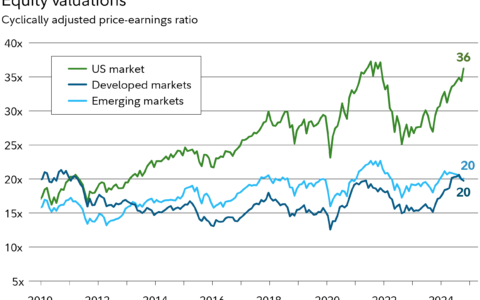
After several strong years in the stock market, many investors worry that stocks are “too expensive.”
A common strategy is:
“I’ll wait for the market to pull back before investing.”
While this sounds logical, valuation metrics like price-to-earnings (P/E) ratios are poor market-timing tools.
Historically:
- Low valuations often lead to strong returns
- High valuations usually lead to moderate but still positive returns
In other words, high valuations rarely mean markets will crash immediately.
In many cases, higher valuations simply reflect expectations of future earnings growth.
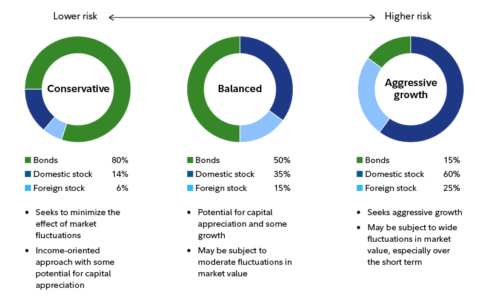
Instead of abandoning equities altogether, investors should focus on diversification:
- international stocks
- emerging markets
- mid-cap and small-cap companies
- different sectors
This approach reduces reliance on a small number of expensive large-cap stocks.
4. Holding Too Much Cash, CDs, or Short-Term Treasuries
Rising interest rates in recent years have made short-term investments like:
- Certificates of Deposit (CDs)
- Treasury bills
- Money market funds
very attractive.
Many investors have shifted large portions of their portfolios into these low-risk instruments.
While these assets offer:
- predictable income
- low volatility
- strong capital preservation
they also have a major limitation:
limited long-term growth potential.
Historically:
| Asset Class | Average Long-Term Return |
|---|---|
| Stocks | High |
| Bonds | Moderate |
| Cash / CDs | Low |
Once inflation is considered, cash-like investments often generate minimal real returns.
Investors with long time horizons typically benefit from maintaining exposure to:
- equities
- diversified bond portfolios
- global markets
Cash should be viewed as a tool for liquidity, not a long-term growth strategy.
5. Trying to Predict the Future
Financial media constantly features bold predictions:
- “The market will crash this year.”
- “Technology stocks will double.”
- “Oil will hit $200 per barrel.”
Some investors enjoy making these forecasts themselves, attempting to predict:
- economic cycles
- sector rotations
- geopolitical events
However, even professional economists and hedge fund managers rarely predict markets consistently.
More importantly, markets often price in expected events before they occur.
This means even when predictions are correct, investors may not profit from them.
The most successful investors instead follow a disciplined strategy:
- diversified portfolios
- regular rebalancing
- long-term investment horizons
- consistent contributions
Predicting the future may feel exciting, but building a resilient portfolio is far more effective.
6. Ignoring Taxes When Investing
Taxes are one of the most overlooked factors affecting investment performance.
Many investors treat brokerage accounts like trading platforms for experimenting with new ideas.
Frequent trading can trigger:
- capital gains taxes
- short-term tax rates
- higher tax bills
Over time, these taxes can significantly reduce net returns.
Smart investors consider tax efficiency, including:
- holding tax-efficient funds
- using tax-advantaged accounts when possible
- minimizing unnecessary trading
- harvesting tax losses strategically
Even small tax improvements can have a powerful compounding effect over decades.
In investing, after-tax returns are what truly matter.
7. Letting “Perfect” Become the Enemy of “Good”
The final mistake is analysis paralysis.
Investors often delay action because they are searching for the perfect investment opportunity.
They ask themselves endless questions:
- What if I buy at the top?
- What if a better investment appears tomorrow?
- What if markets crash right after I invest?
The reality is that investing is inherently uncertain.
Even the most successful investors operate with incomplete information.
What matters most is having a reasonable plan, not a perfect one.
History shows that investors who:
- start early
- stay invested
- remain disciplined
consistently outperform those who constantly hesitate.
The biggest risk is often doing nothing at all.
Final Thoughts
Market uncertainty is nothing new. Every generation of investors faces different fears:
- inflation
- wars
- political instability
- technological disruption
- economic cycles
Despite these challenges, global markets have historically delivered strong long-term growth.
The most successful investors avoid emotional decisions and focus on factors within their control:
- diversification
- discipline
- tax efficiency
- long-term perspective
The greatest mistake is not volatility—it is abandoning a sound investment strategy because of it.
In the end, wealth is rarely built by predicting the future.
It is built through patience, consistency, and disciplined investing.
Author:Com21.com,This article is an original creation by Com21.com. If you wish to repost or share, please include an attribution to the source and provide a link to the original article.Post Link:https://www.com21.com/the-7-biggest-investing-mistakes-investors-are-making-right-now-and-how-smart-investors-avoid-them.html