
As 2026 approaches its midpoint, investors are facing a familiar but uncomfortable combination: markets remain elevated, yet economic uncertainty is still very much alive. Inflation pressures have not fully disappeared, geopolitical risks are rising, and many portfolios are still heavily concentrated in the same U.S. mega-cap winners that have dominated recent years.
That does not mean investors should step away from the market. In fact, periods like this often reward investors who are selective, diversified, and willing to look beyond the most obvious headlines. Based on the investment ideas outlined in the provided material, five areas stand out for the rest of the year: technology stocks, international equities, precious metals, convertible bonds, and health care stocks.
These are not “one-size-fits-all” recommendations. Each idea serves a different role: growth, diversification, inflation protection, income, or value. For long-term investors, the key is not to chase every trend, but to understand how each opportunity may fit within a balanced portfolio.
1. Technology Stocks: Still a Core Growth Engine
Technology has been the market’s dominant story for years, and many investors are understandably tired of hearing about artificial intelligence, cloud computing, semiconductors, and software. Yet the investment case for technology remains difficult to ignore.
The reason is simple: earnings growth.
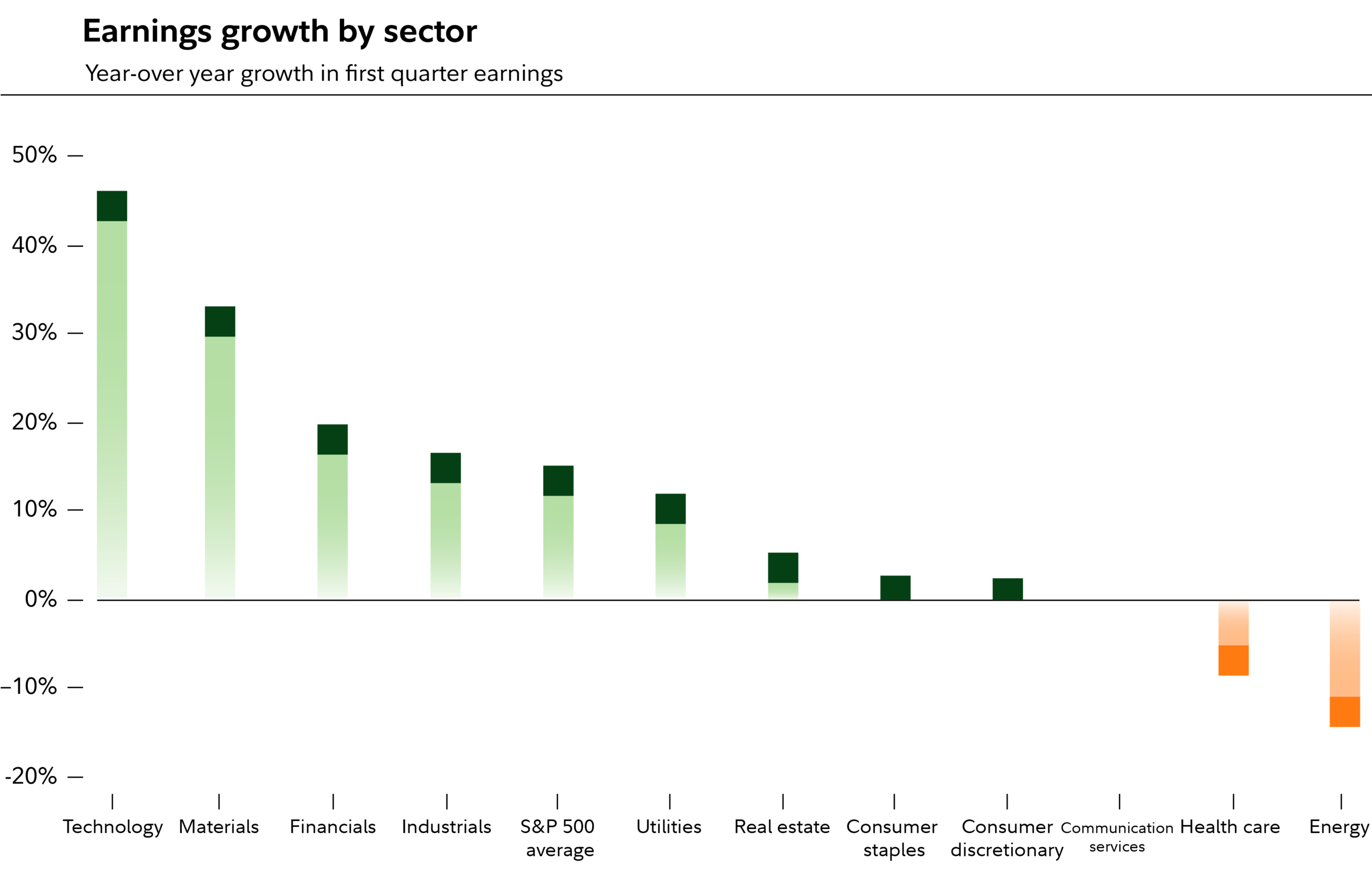
According to the provided outlook, technology delivered the fastest earnings growth of any S&P 500 sector in the first quarter of 2026, while also posting the strongest revenue growth. Even more importantly, profit margins continued to expand despite aggressive investment spending. That combination—rising sales, improving profitability, and continued reinvestment—helps explain why technology has remained a market leader.
Some investors worry that tech valuations are too high. That concern is reasonable, especially after years of strong performance. However, today’s market setup appears different from the speculative technology bubble of the dot-com era. In the late 1990s and early 2000s, many risky technology stocks kept rising even as earnings collapsed. Today, the stronger parts of the sector are seeing earnings reaccelerate.
That does not mean every technology stock is attractive. In fact, recent market performance suggests investors are becoming more selective. Not all AI-related companies are being rewarded equally, and valuations across the sector are no longer moving in one direction. This kind of differentiation can actually be healthy because it separates companies with real earnings power from those relying only on hype.
For investors seeking growth potential for the rest of 2026, technology remains hard to replace. The sector continues to benefit from long-term themes such as artificial intelligence, data center infrastructure, cybersecurity, automation, digital advertising, cloud computing, and advanced semiconductors. Still, investors should avoid blindly chasing the most expensive names. A more disciplined approach may include diversified technology funds, high-quality profitable companies, or companies with strong balance sheets and durable competitive advantages.
2. International Stocks: A Diversification Opportunity Investors Should Not Ignore
For many years, U.S. stocks dominated global markets. That leadership caused many portfolios to become heavily U.S.-centric, sometimes without investors even realizing it. But international stocks have recently begun to reassert themselves.
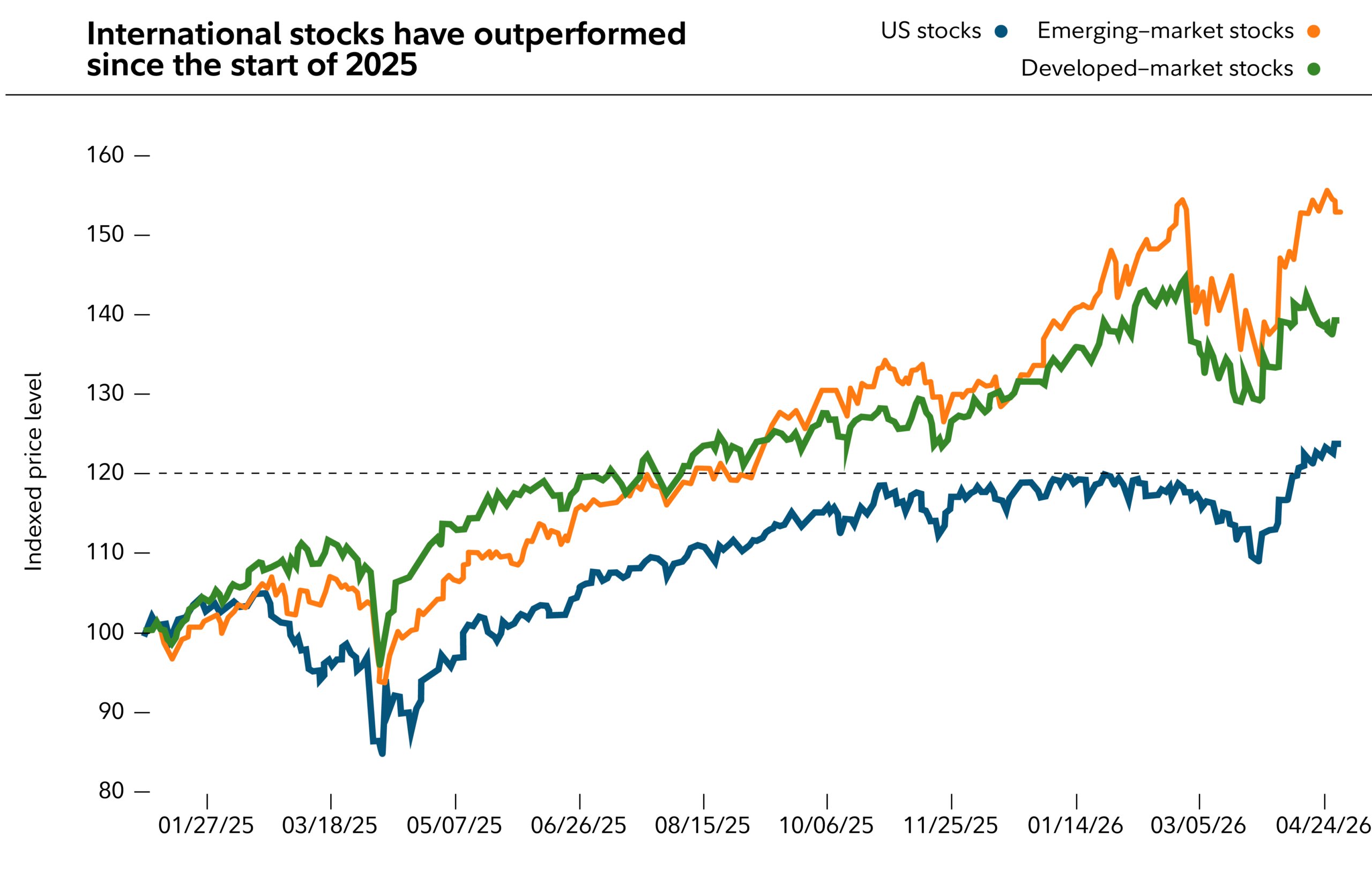
The provided material notes that both developed-market and emerging-market stocks outperformed U.S. stocks by a wide margin in 2025 and remained positive so far in 2026 through mid-May. Emerging markets, in particular, have moved notably ahead.
Even after that strong run, international stock valuations remain meaningfully lower than U.S. valuations. That valuation gap matters because investors may be paying less for exposure to improving fundamentals outside the United States.
Europe is one example. Long-standing headwinds are turning into potential tailwinds as governments increase spending on defense, energy security, and infrastructure. Germany’s major fiscal spending package is especially important because it represents a significant shift for Europe’s largest economy. More public investment could support industrial activity, construction, energy systems, and defense-related companies.
Japan is another important market. Corporate governance reforms have encouraged companies to focus more on shareholder value, capital efficiency, dividends, and buybacks. This has helped revive investor interest in Japanese equities after decades of disappointment.
Emerging markets also deserve attention. After nearly three years of sluggish global manufacturing activity, more countries are reporting improving manufacturing conditions. If the global industrial cycle continues to recover, select emerging-market economies could benefit.
The main reason to own international stocks is not simply to chase recent performance. It is diversification. International exposure gives investors access to different currencies, economic cycles, sector mixes, and policy environments. In a world that is becoming more multipolar, relying only on U.S. stocks may leave investors overexposed to one market and one set of risks.
3. Precious Metals: A Potential Hedge Against Inflation and Geopolitical Risk
Inflation remains a major concern for investors. The provided material notes that the U.S. inflation rate has remained above 2% for more than five straight years, while new inflationary pressures related to Middle East conflict have pushed headline inflation measures higher.
Stocks are often one of the best long-term inflation hedges because strong companies can raise prices, grow earnings, and compound value over time. However, stocks are not the only tool available. For investors looking for additional inflation-hedging potential, precious metals such as gold and silver may deserve a modest allocation.
Gold has historically been viewed as a store of value during periods of currency concern, geopolitical stress, and financial uncertainty. Silver has both precious-metal and industrial characteristics, meaning it can benefit from monetary demand as well as industrial use.
Several forces have supported precious metals in recent years. These include global central bank buying, geopolitical fragmentation, concerns about government deficits, and strong industrial demand for certain metals. In a world where fiscal spending is high and geopolitical tensions remain elevated, these drivers may continue to matter.
That said, precious metals are volatile. They do not produce earnings, pay dividends, or generate cash flow like businesses. Their prices can move sharply based on interest rates, currency trends, investor sentiment, central bank policy, and global risk appetite.
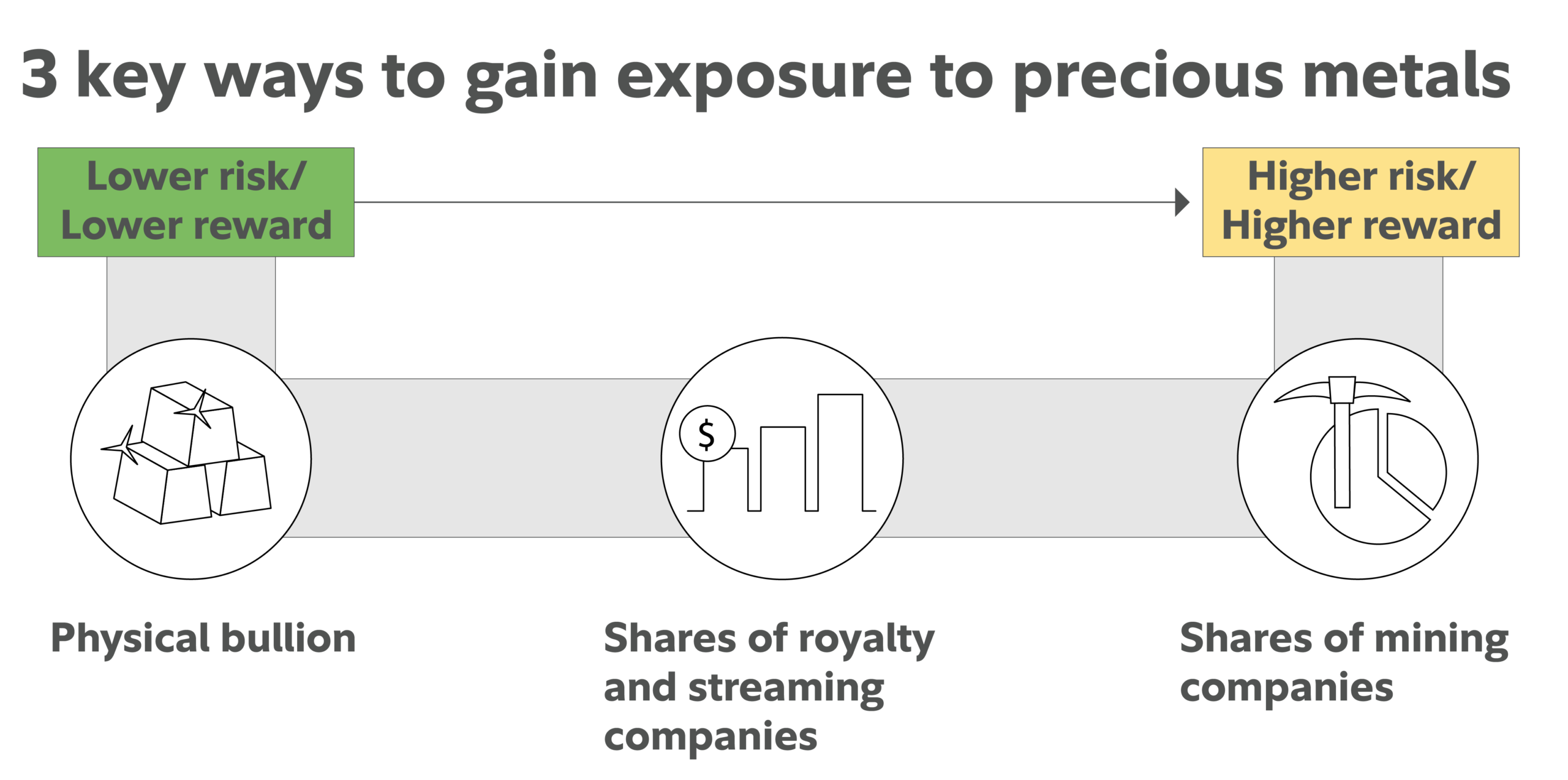
Investors can gain exposure in several ways, including physical metals, precious-metal ETFs, or shares of mining companies. Each has different risks. Physical metals may involve storage and liquidity considerations. ETFs can be easier to trade but may have expense ratios and structure-specific details. Mining stocks can offer leverage to metal prices, but they also carry company-specific operating risks.
For most investors, precious metals should be viewed as a complement, not a core replacement for stocks or bonds.
4. Convertible Bonds: Opportunistic Income With Equity Upside
Convertible bonds are one of the more interesting areas of the market because they sit between traditional bonds and stocks. They pay interest like bonds, but they can also be converted into shares of the issuing company’s stock.
That hybrid structure can be valuable in uncertain markets. If stocks decline, convertibles may behave more like bonds, with their bond value helping reduce downside. If stocks rally, convertibles may participate in the upside through their conversion feature.
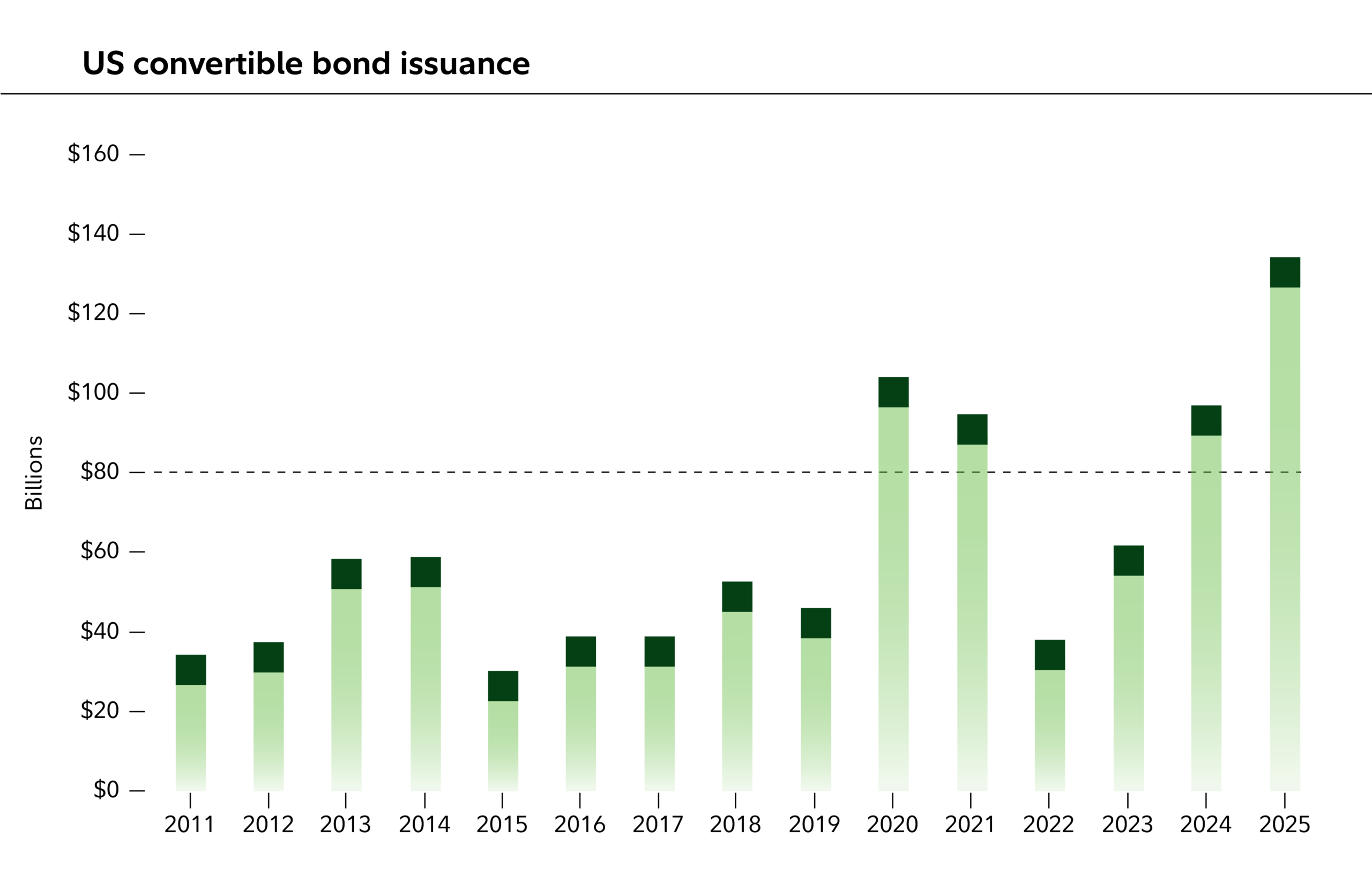
According to the provided material, Fidelity manager Adam Kramer has described the current environment as a “golden age” of convertible bonds. Several factors support that view. The asset class outperformed the stock market in 2025, new issuers are entering the market, and roughly one-third of the convertible market is expected to mature over the next few years. That maturity wall could create demand for new issuance and potentially support prices.
Convertibles may also allow investors to participate in growth themes without taking pure equity risk. Recent opportunities in the market have included AI-related infrastructure and company-specific turnaround stories.
For investors seeking income, traditional bonds may still play an important role. But convertibles can offer something different: income plus the possibility of equity upside. They may be especially attractive for investors who want exposure to growth but are concerned about buying stocks after a strong market run.
Still, convertibles are not risk-free. They can decline if credit conditions weaken, if the underlying stock falls sharply, or if interest rates move unfavorably. Investors should also recognize that convertible securities can be complex, so diversified funds may be more practical than individual issues for many people.
5. Health Care Stocks: A Value Opportunity Hiding in Plain Sight
Health care has been one of the market’s most out-of-favor sectors for years. After the pandemic-era enthusiasm around vaccines and biotechnology, the sector faced several headwinds. These included concerns about major drug patent expirations, weakness in parts of biotech, and reduced funding for early-stage health care companies.
But that long period of underperformance has created a potential opportunity.
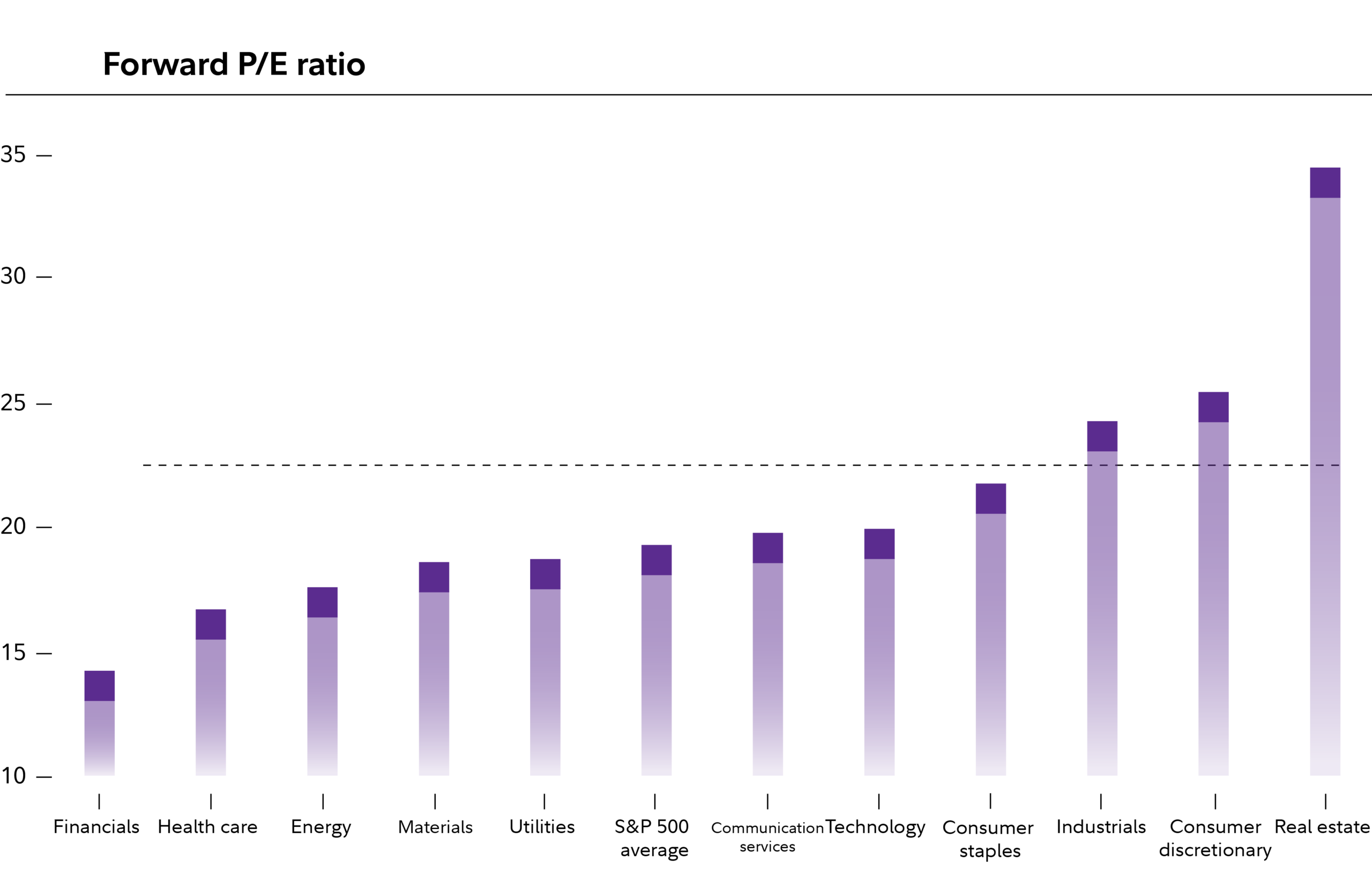
The provided material notes that health care valuations have been hovering near their lowest levels in 35 years. For value-oriented investors, that is worth paying attention to.
One reason health care is often misunderstood is that investors tend to focus only on large pharmaceutical companies or headline themes such as GLP-1 weight-loss drugs. But the sector is much broader. It includes biotechnology innovators, medical device companies, diagnostics firms, health insurers, life sciences tools providers, and businesses developing treatments for serious unmet medical needs.
There are also signs of improvement. The material points to “green shoots” across the sector, including better fundamentals, improving funding activity, and positive clinical trial data. If investor attention eventually rotates away from AI-focused market leadership, health care could benefit from renewed interest.
Health care is also considered an inefficient sector, meaning there can be a large gap between strong and weak businesses. That creates opportunity for research-driven investors. Companies with real innovation, strong management, effective capital allocation, and clear paths to commercialization may stand out.
For the rest of 2026, health care may appeal to investors looking for value, diversification, and exposure to long-term demographic trends. Aging populations, chronic disease treatment, medical technology innovation, and demand for better health outcomes are not short-term themes. They are structural drivers.
Final Thoughts: Build a Portfolio, Not a Bet
The most important takeaway is that these five investment ideas serve different purposes.
Technology offers growth potential. International stocks provide diversification. Precious metals may help hedge inflation and geopolitical risk. Convertible bonds can provide income with upside participation. Health care offers potential value after years of underperformance.
Investors do not need to choose just one. In fact, the stronger approach may be to think in terms of portfolio roles. A well-balanced investor might own some growth exposure, some defensive assets, some income-producing securities, some international diversification, and some undervalued sectors.
The rest of 2026 may bring volatility. Markets are high, uncertainty remains elevated, and risks are real. But uncertainty does not mean there are no opportunities. It simply means investors need to be more selective.
For long-term investors, the goal should be to avoid emotional decisions, stay diversified, and focus on areas where fundamentals, valuation, and portfolio purpose align. Technology, international stocks, precious metals, convertible bonds, and health care each offer a different way to navigate the market environment ahead.
Author:Com21.com,This article is an original creation by Com21.com. If you wish to repost or share, please include an attribution to the source and provide a link to the original article.Post Link:https://www.com21.com/5-investments-with-real-potential-right-now-growth-defense-income-and-value-ideas-for-the-rest-of-2026.html