Markets can be exciting when they are rising, but they can also feel unsettling when valuations are high, headlines are negative, or economic conditions become uncertain. Even when major indexes are near all-time highs, investors may still worry about inflation, interest rates, geopolitical risks, recession fears, corporate earnings, or sudden market corrections. In times like these, successful investing is not only about choosing the right stocks, funds, or asset classes. It is also about building the right habits.
The most successful investors tend to have something in common: They rely on a thoughtful plan, stay disciplined during difficult periods, save consistently, diversify wisely, pay attention to costs, and manage taxes strategically. These habits may sound simple, but they can make a major difference over decades.
A well-built financial plan can help investors cut through short-term market noise and stay focused on long-term goals, even when markets feel unfriendly or uncertain. The following six habits can help investors improve their odds of long-term success and move closer to financial wellness.

1. Start with a Clear Financial Plan
Successful investors do not simply react to headlines. They begin with a plan.
A financial plan serves as a roadmap. It helps you understand where you are today, where you want to go, and what steps are required to get there. Without a plan, it is easy to make emotional decisions based on short-term market movements. With a plan, you have a framework that can guide your investment choices, savings rate, risk level, and time horizon.
A good financial plan should answer several important questions:
What are you investing for? Retirement, a home purchase, education, financial independence, or future income?
How long do you have before you need the money?
How much risk can you realistically tolerate?
How much should you save each month or each year?
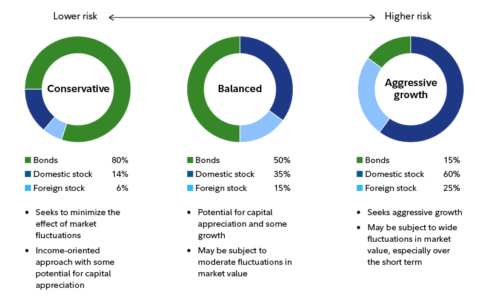
What investment mix gives you the right balance of growth and stability?
Financial planning does not have to be complicated or expensive. Some investors work with a financial advisor. Others use digital planning tools or build a basic plan themselves. The most important thing is that the plan is based on sound principles and realistic assumptions.
A plan also helps separate short-term volatility from long-term progress. For example, if your retirement goal is 20 years away, a temporary market decline may not require a major change. But if you need the money within two years, your investment mix may need to be more conservative.
In other words, successful investors know what their money is supposed to do. That clarity helps them avoid random decisions.
2. Stick with the Plan, Even When Markets Look Unfriendly
One of the hardest parts of investing is staying invested when markets fall.
When portfolio values decline, fear is natural. Many investors feel the urge to sell stocks, move to cash, and wait for things to “feel safer.” The problem is that markets often recover before the news feels comfortable. Investors who sell during panic may miss some of the strongest rebound days.
History shows that abandoning a long-term plan during a downturn can have lasting consequences. According to the provided Fidelity research, workplace savers who stayed invested during the 2008–2009 financial crisis were much better off over the following decade than those who moved out of stocks. Those who stayed invested saw account balances grow 147% in the decade after the crisis, compared with 74% for those who fled stocks during the fourth quarter of 2008 or first quarter of 2009. More than 25% of those who sold out of stocks never returned to the market and missed the gains that followed.
This lesson is powerful. Successful investors understand that volatility is part of the price of long-term growth. They do not necessarily enjoy market declines, but they prepare for them.
That does not mean every investor should hold an aggressive stock portfolio. The right allocation depends on your personal risk tolerance, financial goals, and time horizon. If market declines cause you to panic and sell, your portfolio may be too risky. A slightly more conservative allocation that you can actually stick with may be better than an aggressive allocation that you abandon at the worst possible time.
The goal is not to predict every market move. The goal is to build an investment mix that you can live with in both good markets and bad markets.
3. Be a Consistent Saver, Not Just an Investor
Investment returns matter, but savings habits matter too.
Many people focus heavily on market performance while ignoring how much money they are actually putting away. But successful investors know that saving early and consistently is one of the most powerful forces in wealth building.
As a general rule, Fidelity suggests saving at least 15% of income for retirement, including any employer match. That figure may be too high or too low depending on your age, income, retirement goals, and existing assets, but it is a useful benchmark.
The reason consistent saving is so powerful is compounding. When you invest regularly, your money has more time to generate returns. Those returns can then generate additional returns. Over long periods, this compounding effect can become significant.
Consistency also helps reduce the pressure to time the market. By contributing regularly, investors buy during both strong and weak markets. This approach, often known as dollar-cost averaging, does not guarantee profits or protect against losses, but it can help investors avoid the emotional mistake of investing only when markets feel comfortable.
The provided data also shows encouraging progress among retirement savers. Fidelity’s quarterly report cited in the source notes that workers across generations had increased their savings rates, averaging 9.5% in the first quarter of 2026. When employer contributions of nearly 5% are added, many savers are close to the 15% target. After 15 years of steady saving, the average workplace retirement balance reached $600,700.
That is the power of persistence. Successful investors do not wait for the perfect time. They save regularly and let time work in their favor.
4. Diversify Across Asset Classes, Sectors, and Regions
Diversification is one of the most important foundations of successful investing.
At its core, diversification means not putting all your money in one investment, one company, one sector, or one asset class. A diversified portfolio may include stocks, bonds, cash, and other assets. Within stocks, investors can diversify by region, sector, investment style, and company size. Within bonds, investors can diversify by issuer, maturity, and credit quality.
Diversification does not guarantee gains or eliminate the risk of loss. However, it can help create a more balanced trade-off between risk and reward. When one part of the portfolio is struggling, another part may hold up better.
For example, a portfolio concentrated only in technology stocks may perform very well during a tech boom but suffer heavily if that sector falls out of favor. A globally diversified stock portfolio may reduce dependence on any single country or industry. Similarly, holding bonds with different maturities and credit profiles may reduce exposure to one specific interest-rate or credit event.
Diversification also makes it easier to stick with a plan. A portfolio that is too concentrated may experience extreme swings, increasing the chance that an investor will panic and sell. A more balanced portfolio may still fluctuate, but the ride may be smoother.
The right diversification strategy depends on the investor’s goals. A younger investor with decades until retirement may hold more stocks for long-term growth. A retiree who needs income and stability may hold more bonds, cash, or lower-volatility investments. The key is to build a portfolio that offers enough growth potential while keeping risk at a level you can tolerate.
5. Use Low-Fee Investment Products That Offer Good Value
Successful investors understand that while they cannot control the market, they can control costs.
Investment fees may seem small, but over time they can have a meaningful impact on returns. Expense ratios, advisory fees, trading commissions, fund loads, and other costs reduce the amount of money that stays invested and compounds.
According to the provided information, a Morningstar study found that funds with lower expense ratios have historically had a higher probability of outperforming other funds in their category, including in terms of relative total return and future risk-adjusted return ratings. This does not mean the cheapest fund will always be the best fund, but it does show why costs deserve serious attention.
For many investors, low-cost index funds and ETFs can be effective building blocks. They often provide broad market exposure, transparency, tax efficiency, and low expenses. Actively managed funds may also have a role, especially in certain asset classes or strategies, but investors should evaluate whether the higher cost is justified by the manager’s process, track record, risk controls, and fit within the overall portfolio.
Trading costs also matter. Frequent buying and selling can create commissions, bid-ask spreads, taxes, and behavioral mistakes. Successful investors are usually not constantly chasing the latest hot idea. They focus on long-term value and keep unnecessary costs low.
The basic principle is simple: Every dollar paid in fees is a dollar that is not compounding for your future. Keeping costs reasonable can improve long-term results.
6. Pay Attention to Taxes and Account Location
Taxes can significantly affect investment returns, especially for investors with taxable brokerage accounts.
Successful investors do not let taxes alone drive every decision, but they do consider tax efficiency. They understand that what matters most is not just pre-tax return, but after-tax return.
Tax-advantaged accounts such as 401(k)s, IRAs, and certain annuities may help investors build wealth more efficiently. Contributions, growth, or withdrawals may receive different tax treatment depending on the account type. Using these accounts properly can help improve long-term outcomes.
One important concept is account location. This means deciding how much money to place in different account types based on their tax treatment. Another related concept is asset location, which means placing different investments in the accounts where they are most tax-efficient.
For example, taxable bonds often generate interest income that is taxed at ordinary income tax rates. Because of that, they may be better suited for tax-deferred accounts such as traditional IRAs or 401(k)s. On the other hand, low-turnover index funds, many ETFs, and municipal bonds may be more suitable for taxable accounts because they are generally more tax-efficient or may provide federally tax-exempt income.
Tax-loss harvesting, charitable giving strategies, Roth conversions, and withdrawal sequencing can also play important roles, depending on the investor’s situation. However, tax strategies should be coordinated with the broader financial plan. A tax-efficient move is not helpful if it creates too much investment risk or conflicts with your goals.
The bottom line is that taxes should not be ignored. Two investors with the same pre-tax return can end up with very different after-tax results.
Final Thoughts: Successful Investing Is Built on Discipline
Investing can seem complex, especially when markets are volatile and the news cycle is constantly changing. But many of the most important habits of successful investors are surprisingly straightforward.
Start with a plan. Stick with that plan through difficult markets. Save consistently. Diversify wisely. Keep fees low. Pay attention to taxes.
These habits do not guarantee investment success, and they cannot eliminate risk. But they can improve the odds of reaching long-term financial goals. More importantly, they help investors focus on what they can control.
Markets will always rise and fall. Economic headlines will always change. There will always be reasons to feel uncertain. But a disciplined investor with a clear plan is better prepared to navigate uncertainty and stay focused on the future.
Successful investing is not about making perfect decisions every day. It is about making sensible decisions consistently over time.
Author:Com21.com,This article is an original creation by Com21.com. If you wish to repost or share, please include an attribution to the source and provide a link to the original article.Post Link:https://www.com21.com/6-habits-of-successful-investors-how-to-stay-disciplined-and-build-long-term-wealth.html