Retiring early is one of the most appealing goals in personal finance. The idea of leaving the workforce before the traditional retirement age, spending more time with family, traveling, starting passion projects, or simply enjoying financial independence is powerful. But early retirement is also more difficult than standard retirement planning.
Why? Because you have fewer working years to save and invest, and more retirement years to fund. Someone retiring at 67 may need to plan for 25 to 30 years of retirement. Someone retiring at 54 may need to prepare for 40 years or more. That changes the math dramatically.
The good news is that early retirement is possible with the right plan. It requires clear goals, disciplined saving, smart investing, tax planning, health care preparation, and realistic lifestyle choices. Based on the retirement planning principles provided, here is a step-by-step guide on how to retire early in 8 steps.
Step 1: Estimate How Much You Will Spend in Retirement
The first step in early retirement planning is understanding your future spending needs. You cannot know how much to save unless you have a reasonable estimate of how much you expect to spend.
A common starting point is the retirement income replacement ratio. This assumes that you may need about 80% of your pre-retirement income each year in retirement. For example, if you expect to earn $100,000 per year before retirement, you may need around $80,000 per year in retirement spending.
However, this is only a starting point. Your actual expenses may be higher or lower depending on your lifestyle.
For early retirement, controlling expenses matters even more. If you can reduce your spending today, you can save and invest more aggressively. If you can reduce your expected spending in retirement, you may need a smaller retirement portfolio and may be able to retire sooner.
Key expenses to estimate include housing, food, insurance, health care, travel, taxes, transportation, debt payments, hobbies, and family support. The more accurate your budget, the more realistic your early retirement plan will be.
Step 2: Decide How Long Your Retirement May Last
Early retirement planning is not just about choosing the age you want to stop working. It is also about estimating how many years your money needs to last.
If you retire at 67, your portfolio may need to support you for about 25 to 30 years. But if you retire at 54, you may need your savings to last 40 years or more. Fidelity’s planning tools often default to planning ages in the mid-90s, depending on current age and life expectancy.
That long time horizon creates two major challenges.
First, your money must last for decades. Second, inflation can gradually reduce your purchasing power. A lifestyle that costs $80,000 per year today could cost much more in the future.
This is why early retirees often need a larger savings cushion, a lower withdrawal rate, and a growth-oriented investment strategy. The earlier you retire, the more important it becomes to build margin for uncertainty.
Step 3: Calculate the Total Savings You Need
Once you estimate annual spending and retirement length, the next step is to calculate your target retirement savings.
For people retiring before age 62, Fidelity suggests using a rough guideline of saving 33 times your annual expenses, assuming a 3% annual withdrawal rate.
For example, if your annual expenses are $75,000, your early retirement savings target may be:
$75,000 × 33 = $2,475,000
With a 3% withdrawal rate, a portfolio of $2.475 million could support approximately $74,250 in first-year withdrawals.
This differs from traditional retirement planning. For someone retiring around age 67, a withdrawal rate of 4% to 5% may be considered more sustainable, with adjustments for inflation. But for early retirement, a more conservative withdrawal rate may help reduce the risk of running out of money.
Fidelity also estimates that saving 10 times your pre-retirement income by age 67 may help maintain your current lifestyle. If you expect above-average retirement spending, you may need closer to 12 times your salary. If you want to retire earlier, such as at age 62, maintaining your current lifestyle may require around 14 times your pre-retirement income.
The key point is simple: the earlier you retire, the more you generally need to save.
Step 4: Decide How Much You Can Save Each Year
Your savings rate is one of the most important drivers of early retirement success.
For a traditional retirement age, a common guideline is to save at least 15% of income annually, including employer contributions. But if your goal is to retire early, 15% may not be enough. You may need to save 25%, 35%, 50%, or even more depending on your desired retirement age, current assets, income, spending, and investment returns.
Your savings rate should include all accounts used for retirement or financial independence, such as:
- 401(k) contributions
- IRA contributions
- Health Savings Account contributions
- Taxable brokerage account savings
- Employer matching contributions
- Other long-term investment accounts
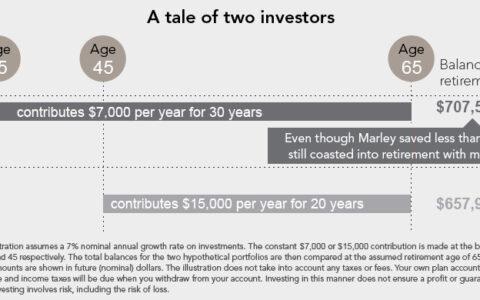
Time also matters. The earlier you start, the more your money can benefit from compounding. If you start late, you may need a much higher annual savings rate to reach the same goal.
If you are age 50 or older, catch-up contributions can help accelerate your progress. These are especially valuable for people who started saving late or who want to strengthen their retirement position before leaving work.
Step 5: Make the Most of Tax-Advantaged Accounts
Taxes can have a major impact on your retirement plan. Using tax-advantaged accounts can help you keep more of your money working for you.
Traditional 401(k)s, traditional IRAs, and HSAs may offer tax deductions in the year you contribute. That can lower your current tax bill and potentially free up more cash to save and invest.
Roth accounts work differently. Contributions do not provide an immediate tax deduction, but qualified withdrawals of earnings can be tax-free if you meet the requirements, including being at least 59½.
HSAs can also be powerful retirement tools for people with eligible high-deductible health plans. Contributions may be tax-deductible, growth can be tax-free, and qualified medical withdrawals can also be tax-free.
For early retirees, it is especially helpful to build tax diversification. That means having money in different types of accounts, including taxable brokerage accounts, tax-deferred accounts, Roth accounts, and HSAs. This gives you more flexibility when deciding where to withdraw money from in retirement.
Step 6: Invest for Long-Term Growth
Saving alone may not be enough to retire early. You also need your money to grow.
For long-term goals, stocks and stock funds can provide growth potential that helps your portfolio keep up with inflation and possibly outpace it. Over many years, this growth can be a major contributor to retirement wealth.
Of course, stocks also come with volatility and risk. The goal is not to take reckless risks. The goal is to build an investment mix that matches your risk tolerance, time horizon, and required return.
Early retirement investors often need to balance two competing priorities. Before retirement, they may need enough growth to reach a large savings target. After retirement, they may need enough stability to support withdrawals during market downturns.
A diversified portfolio can help manage this balance. Many early retirees use a combination of stocks, bonds, cash reserves, and other investments to reduce the risk of being forced to sell during market declines.
Step 7: Plan for Taxes and Health Care Before Age 65
Early retirement creates a difficult gap period. If you retire before age 59½, many retirement account withdrawals may be subject to penalties. If you retire before age 62, Social Security is not yet available. If you retire before age 65, Medicare is not available.
That means you need a bridge strategy.
For retirement account access, some people may be able to use the Rule of 55. This may allow penalty-free withdrawals from a workplace retirement plan such as a 401(k) in the year you turn 55 or later, if you separate from your employer and the plan allows it.
Another option is Internal Revenue Code Section 72(t), which allows certain IRA withdrawals before age 59½ through substantially equal periodic payments. This strategy has strict requirements and should be reviewed with a tax advisor.
Health insurance is another major issue. Early retirees may consider several options:
- COBRA coverage for up to 18 months after leaving a job
- Joining a spouse or partner’s employer health plan
- Buying coverage through the public health insurance marketplace
- Using an HSA, if eligible, to save for future medical expenses
Health care can be one of the biggest early retirement expenses, so it should not be treated as an afterthought.
Step 8: Decide When to Claim Social Security
Social Security can provide inflation-adjusted lifetime income for eligible retirees. But when you claim benefits matters.
You can claim Social Security as early as age 62, but claiming early usually results in a permanently reduced benefit. Waiting until full retirement age can increase your monthly benefit, and waiting until age 70 can increase it further.
For early retirees, Social Security planning is especially important. If you retire before age 62, you may need to bridge the income gap using retirement savings, taxable investments, part-time work, or possibly an immediate annuity depending on your situation.
The best claiming strategy depends on your savings, health, expected longevity, spouse’s benefits, tax situation, and income needs. In many cases, delaying Social Security can provide valuable long-term security, but it requires enough assets to cover expenses in the meantime.
Final Tips for Retiring Early
Start as soon as possible. The earlier you begin saving and investing, the more choices you may have later.
Avoid lifestyle creep. As your income rises, it is tempting to spend more. But if early retirement is your priority, increasing your savings rate may matter more than upgrading your lifestyle.
Use catch-up opportunities. If you are 50 or older, take advantage of catch-up contributions for 401(k)s, IRAs, and HSAs when eligible.
Build flexibility. Early retirement planning involves uncertainty. Markets change, inflation changes, tax laws change, and personal needs change. A strong plan should include room for adjustment.
Retiring early is not simply about quitting work. It is about building financial independence, protecting your future, and creating the freedom to choose how you spend your time. With careful planning, disciplined saving, smart investing, and thoughtful tax and health care strategies, early retirement can move from dream to achievable goal.
Author:Com21.com,This article is an original creation by Com21.com. If you wish to repost or share, please include an attribution to the source and provide a link to the original article.Post Link:https://www.com21.com/how-to-retire-early-in-8-steps-a-practical-financial-roadmap-for-building-freedom-before-67.html