Market volatility is nothing new, but that does not make it any easier to live through.
Investors today are dealing with plenty of reasons to feel uneasy. Inflation remains a concern, questions about the strength of the economy continue to surface, government debt is rising, geopolitical tensions remain elevated, and swings in the Treasury market have created uncertainty for both stocks and bonds. At the same time, investors are trying to understand how artificial intelligence could reshape the economy while also navigating uncertainty surrounding elections and public policy.
With so many moving pieces, it can be tempting to make major portfolio changes in an effort to avoid the next downturn.
History suggests that this instinct can be costly.
Trying to predict short-term market movements has often reduced investors’ long-term returns. One reason is simple: Investors tend to focus on things they cannot control—interest rates, markets, geopolitics, inflation and economic headlines—while overlooking things they can control, including diversification, taxes, portfolio discipline and their own emotional reactions.
Here are seven of the biggest investing mistakes investors should be careful to avoid now.

1. Waiting for Uncertainty to Disappear Before Investing
There is never a shortage of reasons to postpone investing.
Will geopolitical conflicts escalate? Could high energy prices hurt the U.S. economy? Could inflation accelerate again? What happens if bond yields rise? How will artificial intelligence affect jobs, productivity and corporate profits?
These are legitimate questions. The problem begins when investors decide they will remain on the sidelines until the answers become clear.
That day may never arrive.
Naveen Malwal, institutional portfolio manager with Strategic Advisers, has noted that almost every market environment contains several factors capable of making investors uncomfortable. Today it may be interest-rate volatility, elections, AI or geopolitical uncertainty. In another period, investors may be worried about recession, banking stress or some completely different problem.
Waiting for complete certainty can therefore mean waiting indefinitely.
Markets have historically risen over long periods even though uncertainty was present throughout most of those periods. In fact, some of the most attractive long-term opportunities have appeared during periods when investors felt particularly uncomfortable.
There are also positive economic signals worth considering alongside the risks.
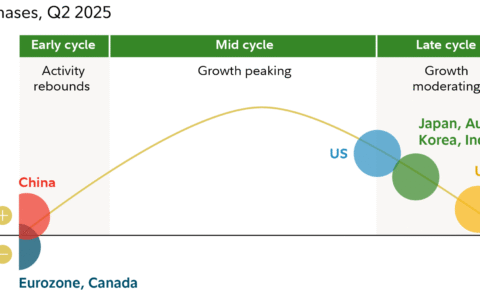
Kana Norimoto, managing director of research on Fidelity’s Asset Allocation Research Team, has pointed to a constructive broader economic backdrop, including a healthy labor market, resilient consumer spending and stronger-than-expected corporate profit growth. Her assessment is that the U.S. economy has generally displayed characteristics of a mid-cycle expansion rather than clear signs of an imminent recession.
The lesson is not that investors should ignore risks. It is that uncertainty alone should not determine whether someone invests.
For long-term investors, discipline is usually more useful than waiting for the perfect moment.
2. Selling Investments Because the Market Falls
Watching a portfolio lose value can be uncomfortable, especially when markets fall quickly.
A sudden rise in Treasury yields, concerns about corporate earnings or disappointing economic news can cause stocks to decline sharply. When that happens, selling may feel like the safest option.
But emotional selling creates another problem: Investors must eventually decide when to buy again.
That second decision is often much harder than the first.
Markets have repeatedly recovered from wars, recessions, financial crises, inflation shocks and other events that looked frightening while they were unfolding. Eventually, markets have historically gone on to reach new highs.
An investor who sells after a major decline may avoid some additional short-term losses. But that investor also risks missing the recovery.
This matters because recoveries do not usually wait for the news to become positive.
Malwal’s point is especially important here: Many investors assume they can sell during a decline and return once conditions improve. Historically, however, market recoveries have often started while headlines were still negative and investors were still nervous.
By the time the economic outlook feels comfortable again, a significant portion of the rebound may already have occurred.
Long-term investing therefore requires accepting a certain amount of short-term volatility.
The better question is usually not, “Will the market fall again?”
It is, “Has anything changed about my financial goals, investment horizon or ability to tolerate risk?”
If the answer is no, a temporary market decline may not justify abandoning a well-designed portfolio.
3. Waiting for Stocks to Become Cheaper
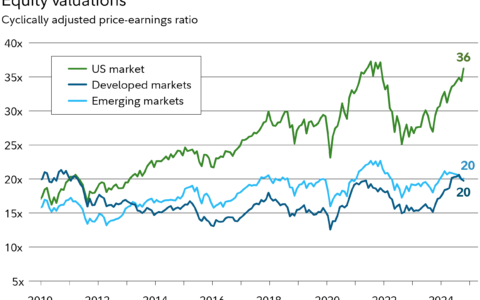
After several strong years for the U.S. stock market, concerns about valuation are understandable.
U.S. stocks were up more than 11% for the year through September 14, 2026, according to the information provided, after producing positive double-digit annual returns during each of the previous three calendar years.
After a run like that, investors may naturally wonder whether stocks have become too expensive.
Valuations are certainly important. But they are not reliable market-timing tools.
A rising stock price does not automatically mean a company has become dramatically more expensive relative to its fundamentals. If revenue and earnings are also growing quickly, valuation ratios such as the price-to-earnings ratio can remain stable—or even decline—while the stock price rises.
Forward P/E ratios for U.S. stocks are currently above their longer-term averages. However, Malwal argues that elevated valuations by themselves are not necessarily a reason to avoid stocks.
Historically, buying when valuations were lower has generally produced stronger subsequent returns. But higher valuations have not automatically resulted in negative returns.
Instead, stocks have historically tended to generate more modest returns following expensive starting valuations. Even then, their potential long-term returns have often remained higher than those available from bonds or cash.
That does not mean valuation should be ignored.
High U.S. equity valuations can strengthen the case for diversification.
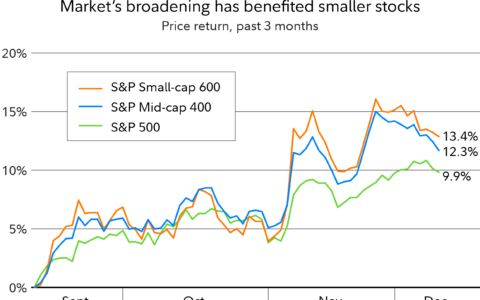
International developed and emerging markets have recently traded at lower average valuations than U.S. stocks. Within the United States, investors concerned about valuation can also look beyond the largest and most widely followed companies.
The key mistake is treating valuation as a precise signal telling you when to enter or exit the market.
It rarely works that way.
4. Keeping Too Much Money in CDs and Short-Term Investments
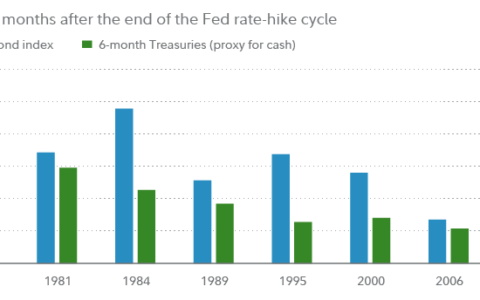
Higher interest rates have made certificates of deposit, Treasury bills and other short-term investments much more appealing.
The attraction is easy to understand.
These investments can offer predictable cash flows, relatively low default risk and far less short-term volatility than stocks.
For money that may be needed soon, those characteristics can be extremely useful.
Problems can arise, however, when investors move too much of a long-term portfolio into short-term investments simply because current yields look attractive.
The tradeoff is growth.
Historically, short-term investments have produced lower long-term returns than stocks and many diversified portfolios. Inflation can make the difference even more important because a seemingly attractive interest rate may produce relatively little real growth after rising prices are taken into account.
Malwal notes that while stocks can fluctuate much more than bonds or short-term investments over shorter periods, stocks have historically produced considerably higher returns over longer periods.
Investors with long time horizons have therefore generally benefited from maintaining broader exposure to stocks, bonds or a combination of the two rather than remaining heavily concentrated in short-term investments for years.
Cash, CDs and Treasury bills have a place in a portfolio.
They simply should not automatically replace long-term growth assets because today’s yields appear attractive.
5. Chasing Yesterday’s Winners
One of the easiest investing mistakes to make is buying whatever has recently performed best.
Strong returns attract attention. Attention attracts money. Before long, investors may find themselves concentrating more and more of their portfolios in a small group of popular stocks or sectors.
Technology stocks connected to the AI development boom provide a timely example.
Some companies positioned around artificial intelligence have produced significant gains, naturally attracting investors hoping those returns will continue.
But market leadership changes.
The industry, investment style or company that dominated one period does not necessarily dominate the next.
According to Malwal, attempting to predict the next big market winner is generally less useful for long-term investors than maintaining diversification across multiple investments.
Diversification means accepting that you will probably never own only the best-performing assets.
That can feel frustrating during a powerful bull market.
Yet the same diversification that prevents an investor from capturing every bit of a concentrated boom can also reduce the damage when leadership reverses.
Investors who put too much money into only a handful of stocks become more vulnerable if earnings disappoint, valuations contract or investor enthusiasm shifts to another part of the market.
A diversified investor may experience less spectacular gains during some periods, but may also experience less severe losses.
Perhaps just as importantly, diversified investors may find it psychologically easier to stick with their investment plans.
And staying invested is often one of the most important ingredients in long-term wealth creation.
6. Ignoring Taxes When Making Investment Decisions
Investment performance should not be measured solely by what a portfolio earns before taxes.
What investors keep matters too.
This is especially important in taxable brokerage accounts, where frequent trading, realized gains and tax-inefficient investments can increase annual tax bills.
A strategy that produces impressive gross returns may look much less attractive after taxes.
For taxable accounts, gradual portfolio adjustments and tax-efficient investing may allow investors to keep more of what they earn over time.
That may include using funds or investment strategies designed to minimize taxable distributions.
Tax-loss harvesting can also be useful in appropriate situations. The strategy involves realizing investment losses that can potentially offset capital gains or, subject to applicable tax rules, a portion of other taxable income.
Importantly, tax considerations should not completely dictate investment decisions.
An investor should not continue holding an unsuitable investment simply to avoid paying taxes.
But taxes should be part of the calculation.
Two investments producing similar pre-tax returns can create very different outcomes depending on turnover, distributions, holding periods and account type.
That makes tax management one of the few areas investors can actively control even when markets themselves remain unpredictable.
7. Investing Without a Detailed Long-Term Plan
Perhaps the biggest mistake is investing without knowing exactly what the money is supposed to accomplish.
Many investors have financial goals.
They want to retire comfortably, buy a home, pay for a child’s education or build long-term financial independence.
But a goal is not the same thing as a plan.
Without a detailed investment plan, investors can easily begin responding to whatever feels most urgent at the moment.
When markets fall, fear takes over.
When stocks rally, fear of missing out takes over.
When a particular investment becomes popular, excitement takes over.
Headlines effectively become the investment strategy.
A more thoughtful approach begins with three basic questions:
What are you investing for?
How long do you have?
How much risk can you realistically tolerate?
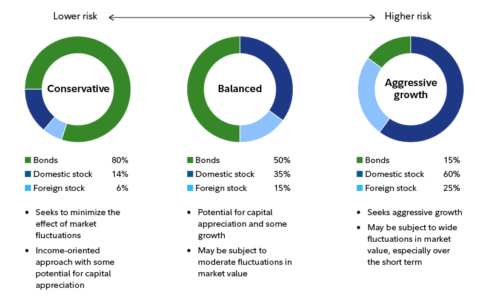
The answers help determine how much of a portfolio should be allocated to stocks, bonds and short-term investments.
A good investment plan should also evolve.
Market conditions change. Interest rates change. Valuations change. More importantly, your own life changes.
After several years of strong stock returns and higher bond yields, for example, someone approaching retirement may want to reconsider the balance between portfolio growth and income.
Malwal emphasizes that financial planning should not be a “set it and forget it” exercise. Investors should review their plans at least annually and consider whether anything important has changed, including income, expenses, unexpected financial events or opportunities in the markets.
The purpose of reviewing a plan is not to react to every market fluctuation.
It is to make sure the portfolio still matches the investor’s real-world needs.
The Bottom Line: Focus on What You Can Control
Investing will always involve uncertainty.
There will always be another election, recession concern, geopolitical crisis, interest-rate debate, technological disruption or market correction capable of making investors uncomfortable.
Trying to eliminate that uncertainty before investing is unrealistic.
A more productive approach is to focus on the factors investors can actually control.
Avoid making emotional decisions during market declines. Do not assume expensive markets automatically mean negative returns are coming. Keep enough short-term investments for genuine short-term needs without allowing cash to dominate a long-term portfolio. Resist chasing whichever stocks performed best last year. Pay attention to taxes. Diversify. And most importantly, build an investment plan tied to your goals and revisit it regularly.
Over long periods, investors have historically benefited from remaining invested rather than repeatedly moving in and out of markets.
That does not mean ignoring risk.
It means managing risk through planning, diversification, tax awareness and discipline instead of trying to predict every short-term market move.
Markets will continue to produce uncomfortable headlines.
A strong investment plan gives you a reason not to let those headlines control your financial future.
Author:Com21.com,This article is an original creation by Com21.com. If you wish to repost or share, please include an attribution to the source and provide a link to the original article.Post Link:https://www.com21.com/7-biggest-investing-mistakes-to-avoid-now-how-to-protect-your-long-term-returns.html